






Cameroon is facing one of its most serious political crises in decades following disputed presidential elections held on October 12. Allegations of widespread fraud, manipulation of vote tallies, and the delayed release of official results have plunged the Central African nation into unrest, with reports of violence, arbitrary arrests, and growing public anger.
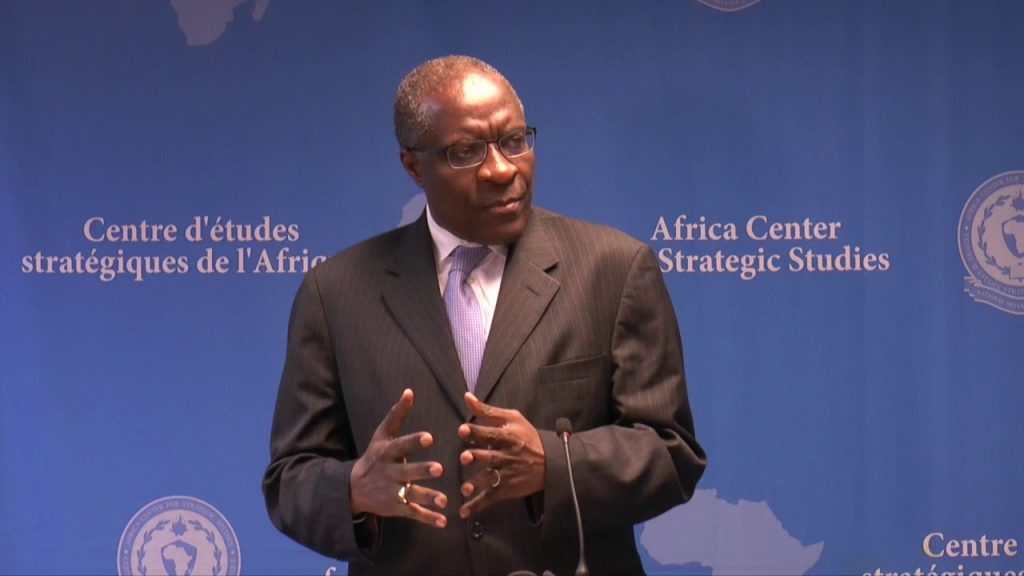
Since election day, protests and clashes have erupted in several cities, leaving dozens dead and hundreds injured, according to civil society groups. “Elections should be moments of civic celebration, not episodes of fear and mourning,” said Dr. Christopher Fomunyoh, founder of the Fomunyoh Foundation and Senior Associate for Africa at the National Democratic Institute (NDI). “Only in opaque and autocratic systems where the rules are bent to preserve power do citizens pay such a heavy price for exercising their democratic rights,” he added.
The controversy stems from claims that vote tallies from polling stations were altered to favor 92-year-old President Paul Biya, who has ruled Cameroon since 1982. Preliminary data collected by opposition parties and independent monitors reportedly show former minister and opposition candidate Issa Tchiroma in the lead. However, the Constitutional Council declared Biya the winner, prompting widespread skepticism about the credibility of the process.
Despite the peaceful conduct of voting on election day, the country’s archaic vote aggregation system and the slow publication of results have fueled suspicions of fraud. “In countries like Senegal, Ghana, or Nigeria, results are announced within 48 hours,” Fomunyoh noted. “In Cameroon, weeks have passed, and citizens are still waiting for clarity.”
Civil society organizations and opposition groups have called for the national elections body, ELECAM, to release detailed polling-station results. They argue that transparency is the only way to restore trust and prevent the country from descending into further chaos. “Releasing results from each polling site would be an act of patriotism and a vital step to defuse tensions,” said Fomunyoh. “Nothing in the law prevents ELECAM from doing so.”
Cameroon’s crisis carries implications far beyond its borders. With a population of more than 30 million, the country has long been viewed as a stabilizing force in Central Africa. But ongoing armed conflict in its English-speaking regions and insecurity linked to Boko Haram in the north have already stretched government authority. Analysts warn that a disputed election could tip the balance toward greater instability across the region.
The stakes are high. Opposition supporters insist that Tchiroma’s support extends beyond his northern base to major urban centers including Yaoundé, Douala, Bafoussam, Dschang, and Limbe. Meanwhile, tensions continue to rise amid arrests of opposition activists and restrictions on the press.
“We cannot dismiss these suspicions,” Fomunyoh said. “Cameroon has been burned before, in 1992 and 2018, when opposition parties claimed victory only to see results reversed. Without verifiable evidence today, calls for calm and respect for the rule of law sound hollow.”
International and regional reactions have so far been muted. The African Union and the Economic Community of Central African States (ECCAS) have expressed concern but stopped short of calling for an independent audit of the vote. Western governments and development partners, preoccupied with crises elsewhere, have urged restraint but offered limited mediation.
Observers say the credibility of this election could define Cameroon’s future for a generation. “If an election can be stolen in broad daylight, then every other act of governance loses legitimacy,” said a political analyst in Yaoundé, who requested anonymity for safety reasons. “The country’s social fabric is already under strain, and the economy is faltering.”
For now, Cameroon teeters on the edge its people yearning for truth, accountability, and leadership willing to confront reality. “The release of the full results is a matter of national urgency,” Fomunyoh said. “It could mean the difference between reconciliation and rupture.”
Dr. Christopher Fomunyoh is founder of the Fomunyoh Foundation and Senior Associate for Africa at the National Democratic Institute for International Affairs (NDI). He is also Adjunct Professor of African Politics at Johns Hopkins University, Washington, D.C.