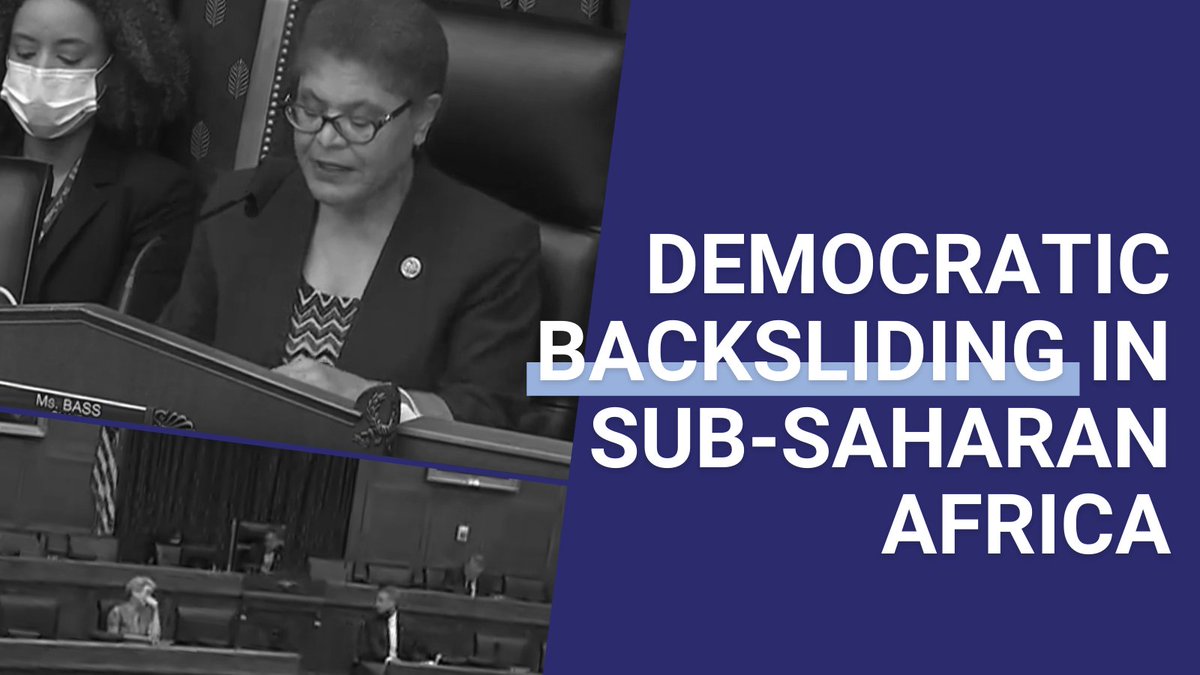







Dr. Christopher Fomunyoh, Senior Associate & Regional Director for Central and West Africa of the US based National Democratic Institute, NDI, has testified at “Democratic Backsliding in Sub-Saharan Africa” House Foreign Affairs Committee, Subcommittee on Africa, Global Health, Global Human Rights, and International Organisations, recently on 30 September 2020 . In his presentation, entitled ” Facing Democratic Backsliding in Africa & Reversing the Trend ” Dr Fomunyoh lashed out at sit-tight African leaders, urging the international community to help Africa ‘chase out’ long-serving leaders from power. He went further to cite Cameroon among countries where democracy is regressing .
Chairman Bass, Ranking Member Smith, and distinguished members of this Subcommittee, on behalf of the National Democratic Institute (NDI), I appreciate the opportunity to discuss democratic backsliding in Sub-Saharan Africa, and issues of institutional fragility, freedoms and human rights.
In one notable example, in 2008, in Cameroon, incumbent president Paul Biya in his 26th year in office, forced through a constitutional amendment to eliminate term limits so he could stay in power. In the street protests that followed, over 140 youth were killed by security services, acting with total impunity. Eight years later in 2016, when English speaking lawyers and teachers in the otherwise bilingual country protested the marginalization of Anglophones or natives of the former British Southern Cameroons, the government resorted to the same use of force that worked in 2008, instead of addressing the genuine political grievances of that population. That response from the government caused what began as civil complaints to degenerate into an armed conflict with major consequences for the country and the subregion.

Today, the conflict has led to the loss of thousands of lives, hundreds of villages razed, tens of thousands of refugees across the border in neighboring Nigeria and hundreds of thousands of internally displaced persons in other regions of the country. The United Nations estimates that millions of Anglophone Cameroonians are now at risk of famine because of the conflict.

To many Cameroonians from the affected regions, this conflict has become an existential threat to them and future generations, and with every new day of killings and atrocities, demands to opt out of the current state only grow louder. Similarly, after the 2018 presidential election, the outcome of which was contested by one of the main opposition candidates, Maurice Kamto of the Cameroon Renaissance Movement, the government has resorted to the same strong arm tactics to muzzle political opposition, journalists and all manner of dissent. Today, after 38 years as president, 87-year-old Paul Biya hangs on to power and can seek reelection for the rest of his life while the country burns and risks falling apart.