






Cameroon’s anglophone war, part 1: A rifle as the only way out: The line separating fighters from refugees is very thin; their journeys are nearly the same.
“I killed three of them,” says Abang. “I use this [gun] to kill them like animals, as they are killing me, killed all my brothers.”
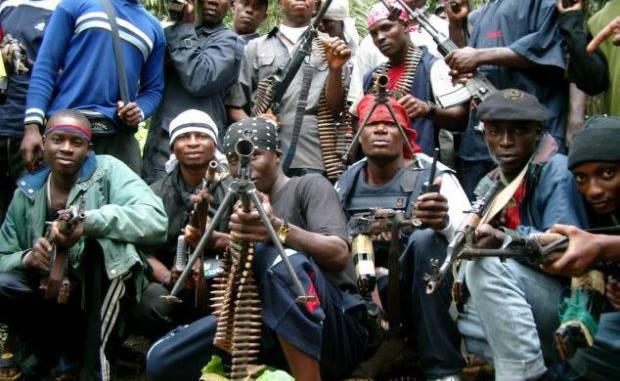
Before the army destroyed his village and killed his three brothers, Abang was a farmer and an electrician. Today, he’s one of hundreds of anglophone men fighting with hunting rifles and magical amulets against the US- and French-trained Cameroonian army in an attempt to win independence for a new country they call Ambazonia.
Cameroon’s anglophone minority has been requesting greater autonomy since former territories held by the British and French were federated into one central African nation in 1961. These demands have become steadily more vocal since the 1980s.
Map of Cameroon featuring the Northwest and Southwest regions
In October 2017, peaceful protests – calling for the use of English in courts and classes – took a turn for the worse when security forces killed dozens of demonstrators and jailed hundreds more. This violence led to the birth of several separatist armed groups that have since killed and kidnapped numerous officials in the Northwest Region and the Southwest Region, the two majority anglophone areas. Abang’s group, the Ambazonia Defense Forces, or ADF, is the largest.
More than 180,000 people have been displaced by counter-insurgency operations by Cameroon’s security forces, who have killed civilians and burnt down villages. Most of the fighters interviewed by IRIN joined the militia after they were forced to flee their homes.
In a report published today, Amnesty International says separatists have killed at least 44 security forces and attacked 42 schools since February 2017. Some of the attacks on schools were attributed to the Ambazonia Defense Forces by the local population, but Amnesty could not establish that link and a spokesman for the ADF denied the group’s involvement. Amnesty also reported allegations that more than 30 people have been arbitrarily killed by security forces, including a high-profile attack on the village of Dadi in December 2017 in which at least 23 people, including minors, were arrested and then severely tortured.
The government has denied allegations of systematic human rights violations by its security forces. It says it is open to dialogue, but insists that the unity of Cameroon is “non-negotiable.”
READ: Cameroon’s anglophone war, part 1: A rifle as the only way out
The line separating fighters from refugees is very thin; their journeys are nearly the same.